Thanks to the help of one of our North Carolina Community Contributors, we are excited to announce that the yearbook The Hornet [1962], from Hillside High School in Durham, is now available on DigitalNC. This latest addition joins ten more Hillside High School yearbooks that are available to browse on DigitalNC. This latest yearbook, along with over 500 others, can be found in DigitalNC’s North Carolina African American High Schools exhibit.
Viewing entries tagged "yearbooks"

![The cover of yearbook The Hornet [1962]. The black cover features "THE 1962 HORNET" in white text along the left and bottom sides of the cover. A gold illustration of a sundial is featured in the upper right side of the cover.](https://www.digitalnc.org/wp-content/uploads/2025/11/Screenshot-2025-11-12-101306-1.png)
Lewisville Historical Society Brings Yearbooks, Maps, Local History, and New Issues of The Lewisville Citizen!
Thanks to our partners at Lewisville Historical Society, we are excited to announce the addition of fifty-three new issues of The Lewisville Citizen (Lewisville, N.C.), 20 yearbooks, a map of Forsyth County, and a local history book to DigitalNC.

The latest issues of The Lewisville Citizen (Lewisville, N.C.) span from 1956 to 1961, and join 94 issues from 1948 to 1956 that are already on DigitalNC. Be sure to browse stories on May Day celebrations, the Lewisville Volunteer Fire Department, the senior class trip to Washington D.C., the annual “Citizen of the Year” award, and more in the these latest issues!
The history book, Shallow Ford Country, by G. Galloway Reynolds, chronicles the history of the Shallow Ford area in modern-day Forsyth, Yadkin, and Davie Counties. The area was named after a geographical feature, known as a river ford, in the Yadkin River. This shallow spot that was used as a crossing area by Native Americans, colonial settlers, and military troops, making the area a crucial site of settlement, conflict and culture in the region. The book details the early colonial history of the area and its settlements across the 18th and 19th centuries. The area of Shallow Ford can also be seen in context to Forsyth County in the bottom left region of the new map also included in this batch of materials.

Finally, the 20 new yearbooks hail from three different schools across Forsyth County – Southwest High School in Winston-Salem, West Forsyth High School in Clemmons, and Lewisville High School in Lewisville. A detailed list of these new additions, which features links to each yearbook, can be browsed below:
![The yearbook titled The Iliad [1963], which features a crimson red cover, decorated with the text "THE ILIAD" and "'63," along with an embossed illurstration.](https://www.digitalnc.org/wp-content/uploads/2025/11/Screenshot-2025-11-11-100053.png)
![The cover of the yearbook Cronus [1968] which features the title "CRONUS" and phrase "SPIRIT OF '68" in green decorative script on a cream-colored cover.](https://www.digitalnc.org/wp-content/uploads/2025/11/Screenshot-2025-11-11-100015.png)
![The cover of LaHaSa [1949] which features a black background along with the words "1949" and "LaHaSa" in gold text. A gold embossed illustration showing a pair of student graduates gazing into a large clock is also present on the cover.](https://www.digitalnc.org/wp-content/uploads/2025/11/Screenshot-2025-11-11-154355.png)
Southwest High School (Winston-Salem, N.C.)
West Forsyth High School (Clemmons, N.C)
Lewisville High School (Lewisville, N.C.)
All available issues of The Lewisville Citizen (Lewisville, N.C.) can be browsed here.
More information about our partner, Lewisville Historical Society, can be found on their website, linked here.
More materials, including genealogies, can be found on Lewisville Historical Society’s contributor page, linked here.
New Editions of the University of North Carolina School of the Arts Yearbooks Available Now!
Thanks to our partner, the University of North Carolina School of the Arts, nine new yearbooks from 2017 to 2025 are now live on our website!
Located in Winston-Salem, North Carolina, UNCSA is a highly respected creative and performing arts academy offering both high school and undergraduate education. The school has produced some of the top artists across disciplines, raising the next generation of elite performers.
This new batch of yearbooks honors the school’s mascot, the Fighting Pickle. The student-created covers feature the pickle in a variety of scenes; one depicts the pickle on the cover of Dr. Seuss’ Oh, the Places You’ll Go!, another stars him as the performer on a stage, and another one has two pickles swimming in the ocean. These creative covers reflect the innovative talent of UNCSA. The 2016-2017 yearbook also contains a special surprise, seeing as TV and film star Hunter Schafer designed the art! Before she became Jules Vaughn in Euphoria or Tigris Snow in The Hunger Games: The Ballad of Songbirds and Snakes, she was a student at UNCSA.
To see all the materials from UNCSA we’ve digitized, click here.
To learn more about the school and its various programs, visit their website here.


Gardners High School 1949 Yearbook Now Online

Thanks to a North Carolina Community Contributor, Gardners High School (Wilson, N.C.)’s 1949 yearbook is now available to view online!

Enjoy looking at photographs of students and faculty of Gardners High School and perhaps investigating the accuracy of the Class of 1949’s class prophecy (bonus points if you find your answers using DigitalNC resources!). We’d love to know if Clara went to college for home economics, Cleo married a pilot, Doris taught history, Billy sold cars in Greensboro, Buntin married Betsy, Thomas played big-league baseball, or if anything else listed was accurate!
To view more yearbooks from Gardners High School, click here. To view more North Carolina High School yearbooks, visit DigitalNC.
To explore more materials from North Carolina Community Contributors, visit their contributor page here.
New Yearbooks from New Bern-Craven Public Library Are Now Available
Thanks to our partner, the New Bern-Craven County Public Library, three new yearbooks are now available on our website!

The oldest yearbook is from 1922, representing New Bern High School. The pages are full of beautiful illustrations and black-and-white photographs of students and faculty. This class of graduating seniors entered high school in 1918, during the height of the “Spanish Flu.” The pandemic spread throughout the state, mainly following the railroad lines that connected cities across North Carolina. Historians estimate that one million people, or one-third of the population, contracted the flu in North Carolina, and more than 13,000 ultimately succumbed and passed away because of the illness. The “Class History” section of The Cub barely mentions the disease, only noting that they “overcame” the “flu” along with a series of other challenges. The seniors were eager to forget about the deadly disease that affected so many of their friends and families.

The second yearbook is from 1923 from the Craven County Farm Life School. Originally opened in 1913 as part of an effort to bring schools to rural parts of North Carolina, Craven County Farm Life School only had thirty total students enrolled. By the time the school celebrated its tenth anniversary, the senior class alone was almost thirty students, and the school had expanded to include numerous clubs and sports teams.
The third yearbook is from Fort Barnwell School and was published in 1949. This is also the first yearbook published for the school, and the senior class only had six students. Established in 1945, this group of students was the first to graduate after attending high school there for all four years. Fort Barnwell also provided schooling for students in first through twelfth grade. One fascinating aspect of this yearbook in particular is at the end. Joyce French, the owner of the yearbook, wrote a touching obituary for her fellow student, Irene Jones, who passed away in 1953 in a drowning accident. Irene and Joyce are pictured together in their third-grade class picture in this edition of The Fort.
To learn more about the New Bern-Craven Public Library, check out their website here.
To see more yearbooks contributed by New Bern-Craven Public Library, click here.
Have No Fear, New Volumes of the Mountaineer and Pisgahteer Are Here!
With the help of our partners at Haywood County Public Library, we are excited to announce that two new yearbooks are now available to browse on DigitalNC. The first yearbook, Mountaineer [1975], is from Tuscola High School (Waynesville, N.C.), and joins eight more Tuscola High School yearbooks on DigitalNC. The second yearbook, Pisgahteer [1975], is from Pisgah Senior High School (Canton, N.C.), and finds itself in the company of six more Pisgah Senior High School yearbooks that can be browsed on DigitalNC.
![The cover of the Tuscola High School yearbook Mountaineer [1975]. The light yellow yearbook features the name "Tuscola" printed in large, decorative script across the cover.](https://www.digitalnc.org/wp-content/uploads/2025/07/Screenshot-2025-07-30-092309.png)
![The cover of the Pisgahteer [1975], the yearbook for Pisgah Senior High School. The tan cover features a burgundy shield in the middle with the word "PISGAH" printed in gold across it. The shield is surrounded by pine needle branches and pine cones. A black bear is illustrated resting partially atop of the shield.](https://www.digitalnc.org/wp-content/uploads/2025/07/Screenshot-2025-07-30-092336.png)
More information about our partner, Haywood County Public Library, can be found on their website, linked here.
More materials, including photographs, certificates, a newspaper title, and more yearbooks can be found on Haywood County Public Library’s contributor page, linked here.
Wendell Historical Society Brings New Yearbooks to DigitalNC
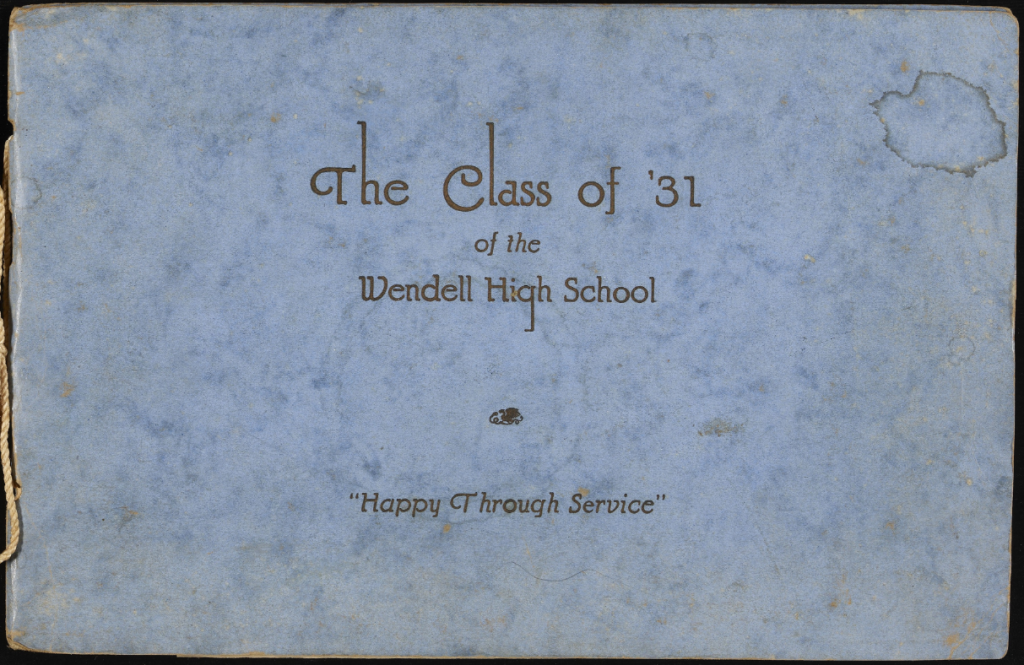
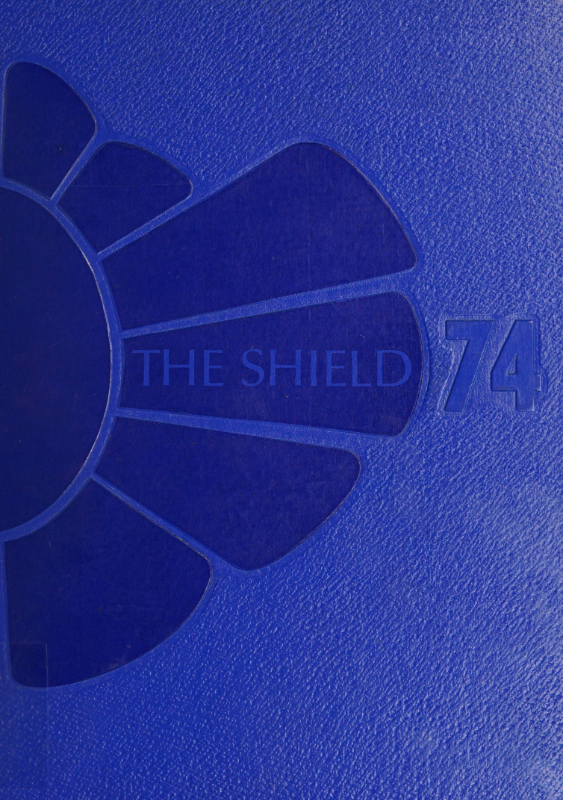
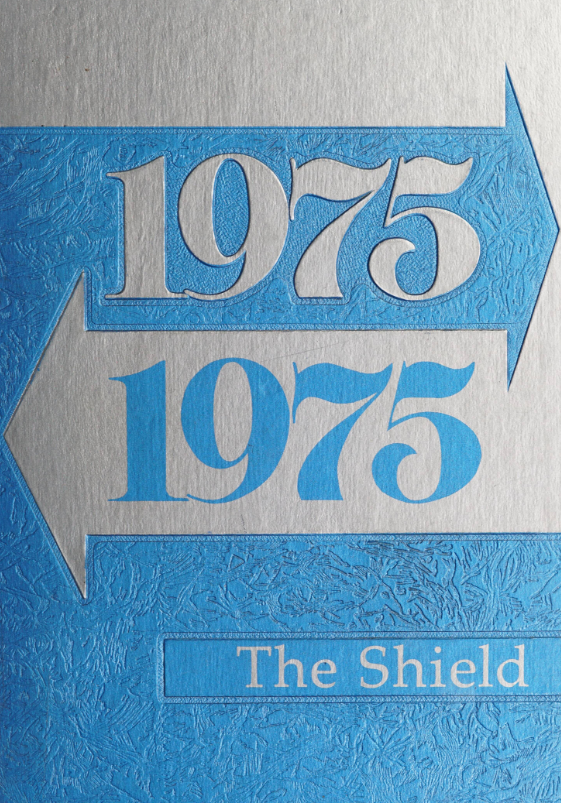
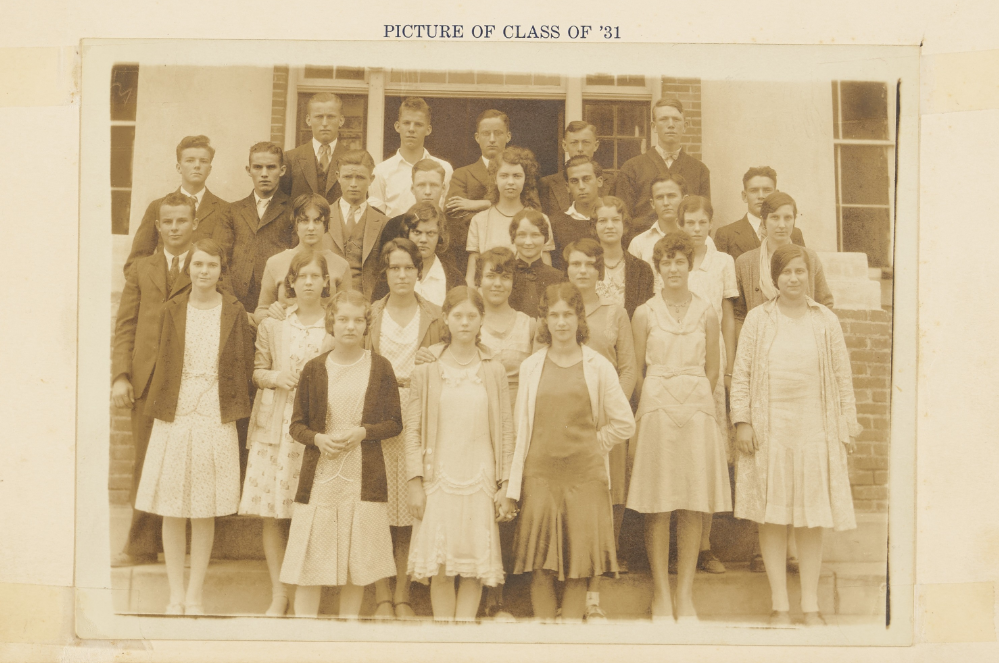
With the help of our partner Wendell Historical Society, we are excited to announce that three new yearbooks from Wendell, N.C. are now available on DigitalNC. These newest additions include yearbooks from Vaiden Whitley High School (Wendell, N.C.) and Wendell High School (Wendell, N.C.). These latest yearbooks are detailed below:
- Vaiden Whitley High School (Wendell, N.C.)
- Wendell High School (Wendell, N.C.)
More information about our partner, Wendell Historical Society, can be found on their website, linked here.
To view more materials from Wendell Historical Society, visit their contributor page linked here.
A Plethora of New Materials Pull Into the DigitalNC Station
Thanks to our partner, Railroad House Historical Association and Museum, three batches chock-full of materials are now available for viewing on DigitalNC. These batches include issues from three Sanford area newspapers—The Sanford News Leader, Central Carolinian, and Lee County Senior High School’s student newspaper—twelve yearbooks from Deep River High School, along with over 180 photographs, postcards, and catalogs that feature automobiles and trains.

Among these records are photographs of several automobiles, like this 1916 Stutz Bearcat, owned by O. A. [Otho Alexander, or “Ote”] Corriher. Son of Lotan Alpha Corriher—former textile industrialist, Landis Mayor, and notable patron of Catawba College—Ote became well-known in his own right in for his sense of adventure, service as one of 13 pilots in the Civil Air Patrol in Manteo, North Carolina during World War II, interest and work with planes and automobiles, and a world-class classic car collection.
After the bombing of Pearl Harbor, leveraged his piloting skills to aid in the American war effort after the bombing of Pearl Harbor, Ote applied and was accepted into the Army Air Force’s newly created Civil Air Patrol (CAP) organization. The first CAP base in Manteo patrolled the coast off the Outer Banks known as the “Torpedo Junction.” After the start of World War II, but before America’s entry, the Torpedo Junction became an extremely dangerous area for shipping. German U-Boats, unchallenged, were successfully sinking and damaging vital shipping boats. Often using their personal planes, CAP pilots would fly up and down the coast searching for the German submarines and sailors in destress. In addition, they also apparently conducted sea rescues, towed targets for military training, performed courier service, and help fight forest fires. After serving in CAP from July 1942 to March 1942, he spent three years in the Army until the end of the war.
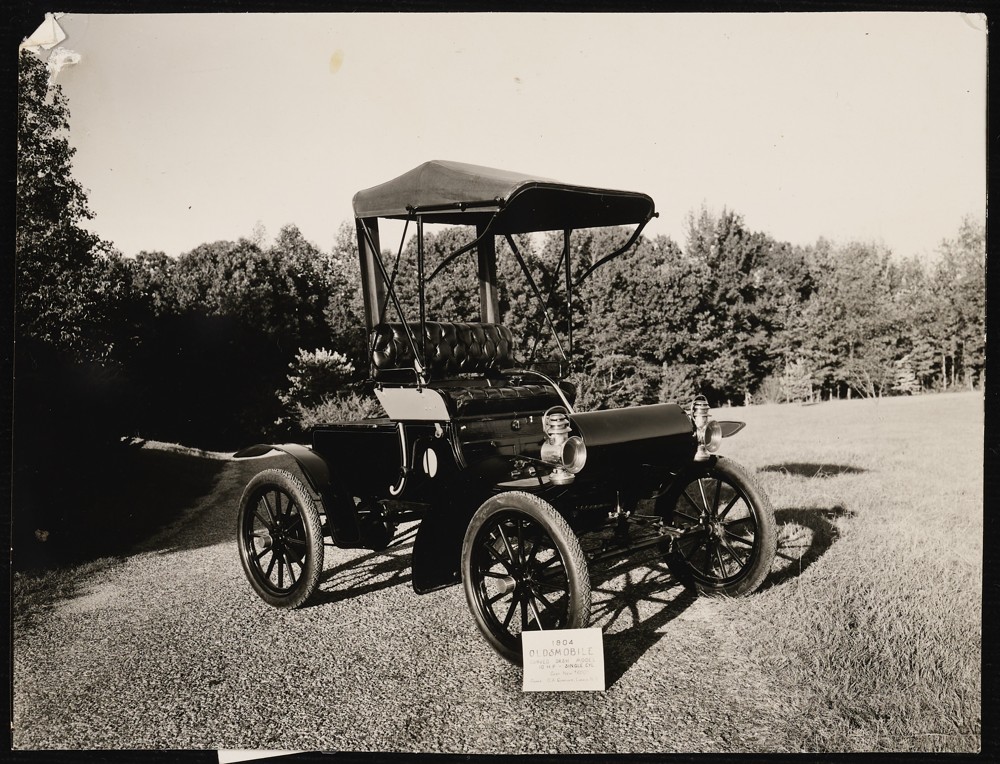
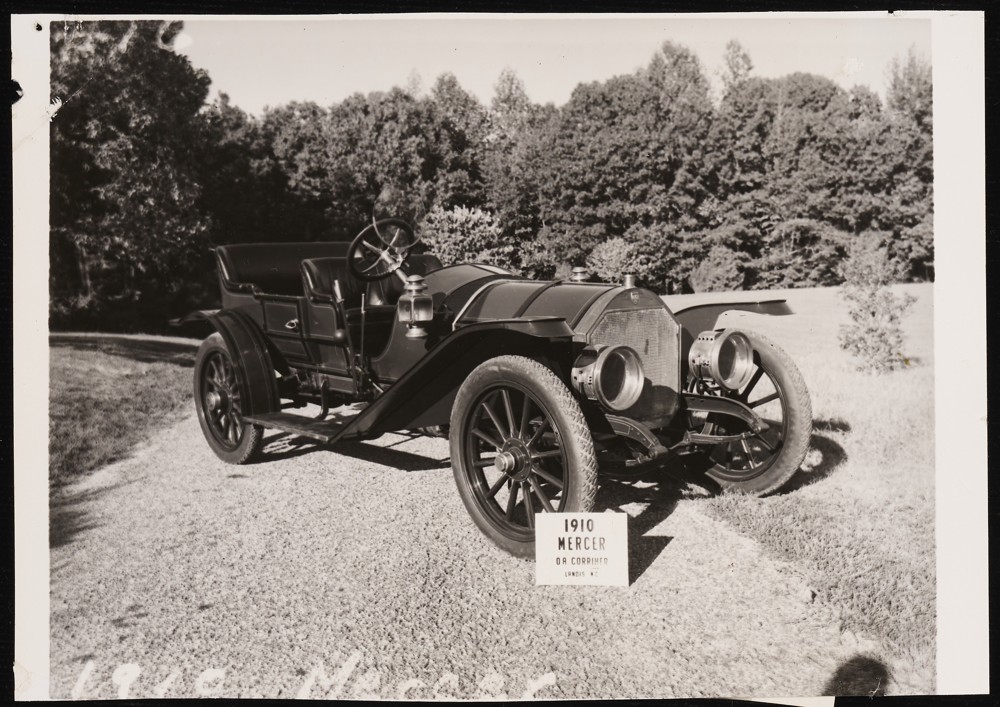
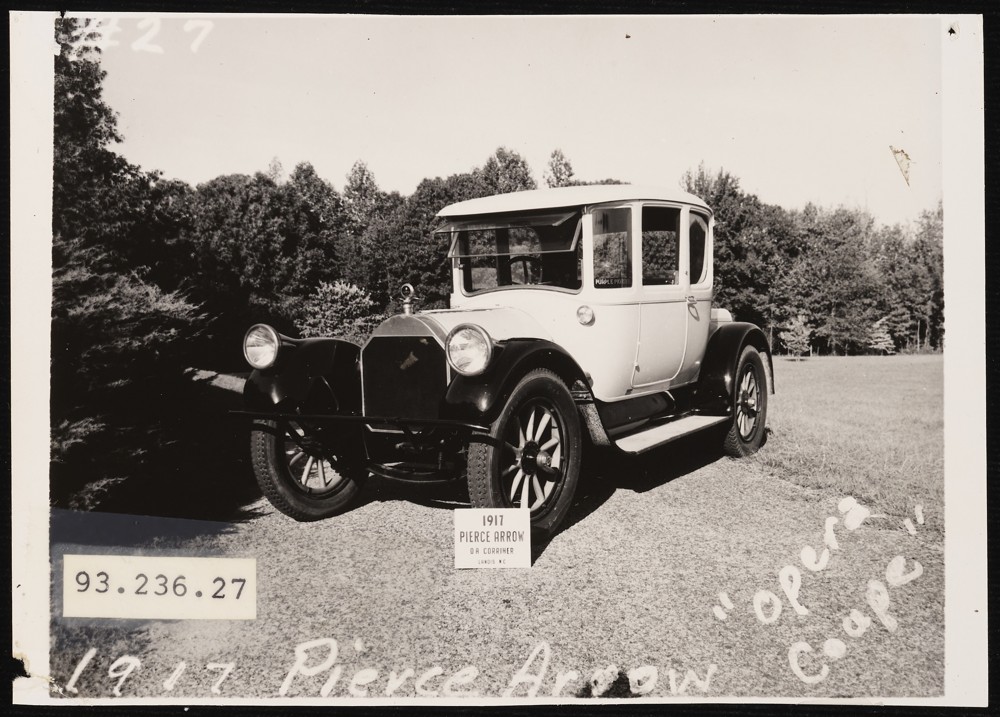
From left to right: 1904 Oldsmobile, 1910 Mercer, 1917 Pierce Arrow Opera Coupe.
Afterwards, he reluctantly went back to his position as the treasurer for his family’s textile mill. But when Ote wasn’t working at the mill, he would build planes in his basement, convert used military planes he bought into crop dusters, and eventually, he began restoring classic cars. In 1951, Ote and five other car enthusiasts in the state founded the Horseless Carriage Club. The Club, according to an article in the August 4, 1955 issue The Pilot (Southern Pines, N.C.), was for individuals who appreciated and restored classic cars themselves using original, or parts handmade by the restorer. At the time the article was printed, Ote apparently had a collection of 24 classic cars. The six cars attributed to him in this latest batch are likely part of that group.
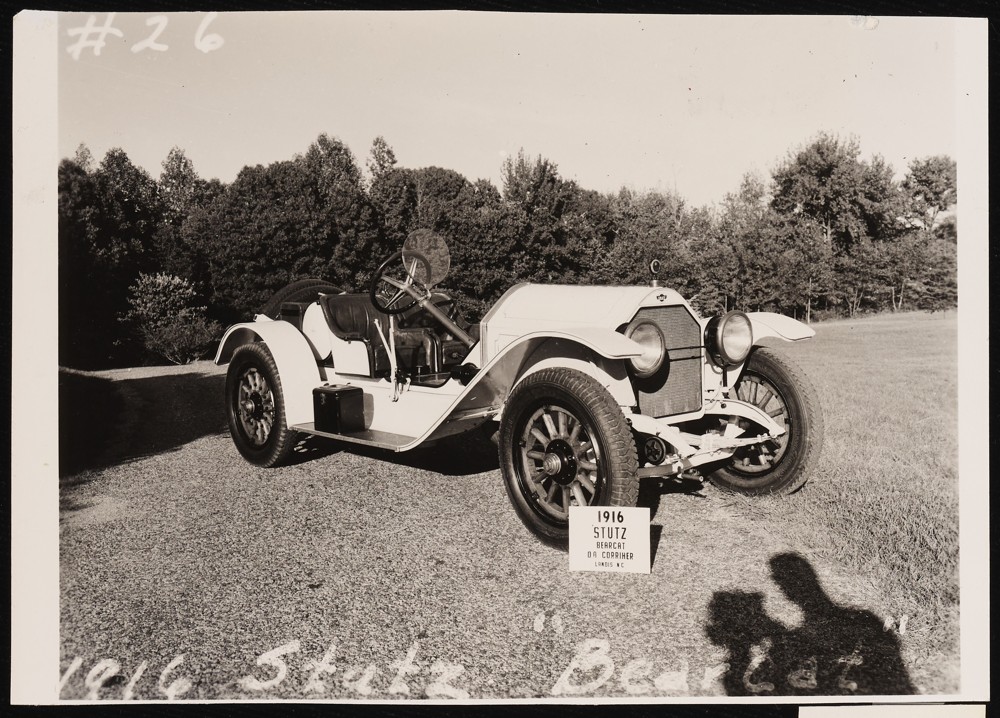
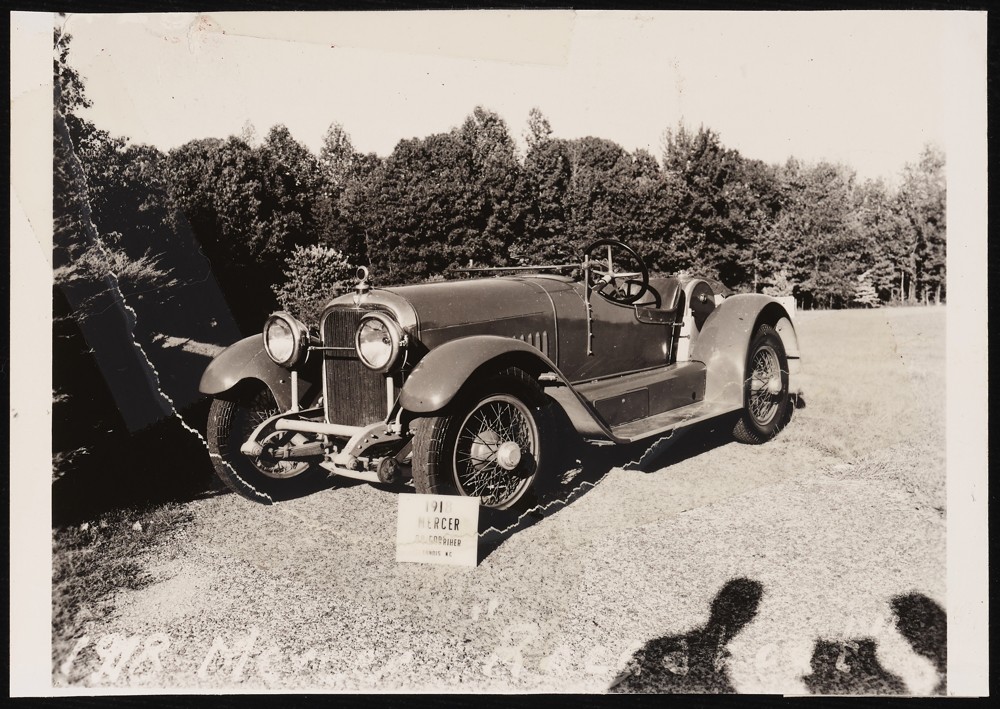
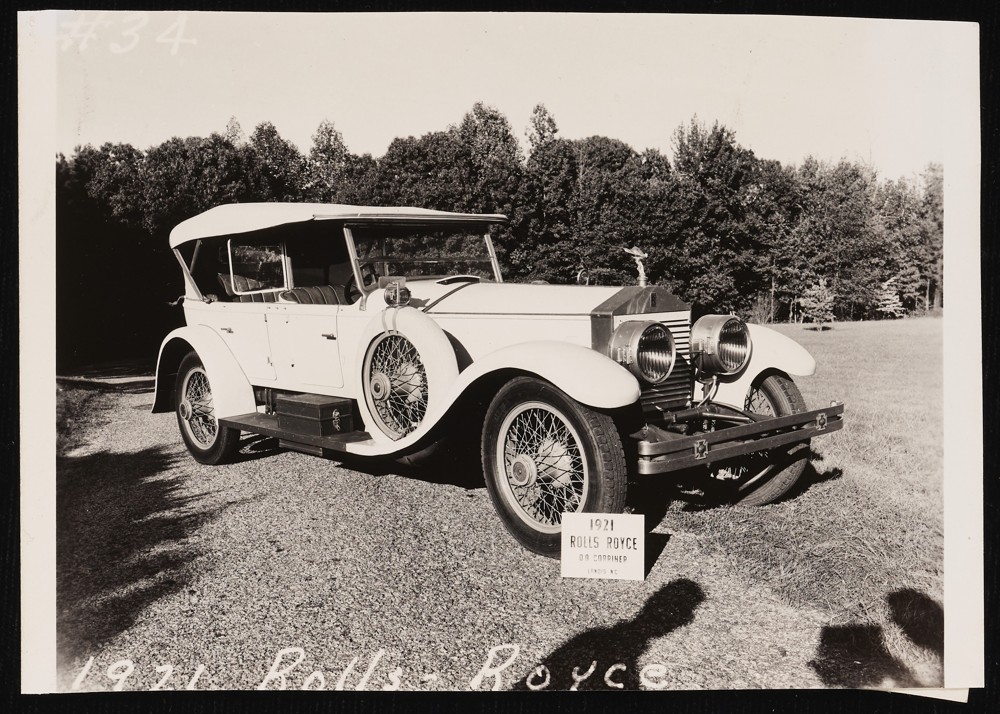
From left to right: 1916 Stutz Bearcat, 1918 Mercer Raceabout, 1921 Rolls Royce.
Materials and information about Ote Corriher was gathered from The Salisbury Post‘s December 2017 article linked here, Catawba College’s 1928 yearbook, and August 4, 1955 issue of The Pilot (Vass, N.C.).
To learn more about the Railroad House Historical Association and Museum, visit their website here.
To browse all 400+ materials contributed by the Railroad House Historical Association and Museum on our site, visit their contributor page here.
To view more newspapers or yearbooks from across the state, view our yearbook collection here or newspaper collection here.
New Editions of Pinehurst High School’s Rebel Yearbook are Available Now!
Thanks to our partners at Moore County Historical Association, five new yearbooks from Pinehurst High School are now available on our website!
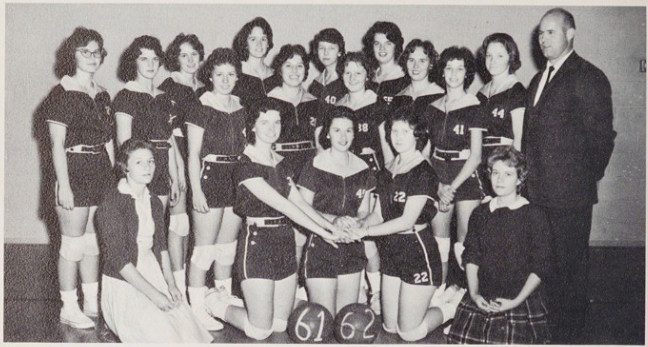
The yearbooks span from 1962 to 1966 and highlight sporting events, club activities, and classroom lessons. The Pinehurst Rebels were an involved group, with a multitude of clubs and sports teams for students to participate in. Both the girls’ and boys’ basketball teams were popular, and home games always drew large crowds. The Monogram Club, an organization for students who earned varsity letters in their sports, was also robust.
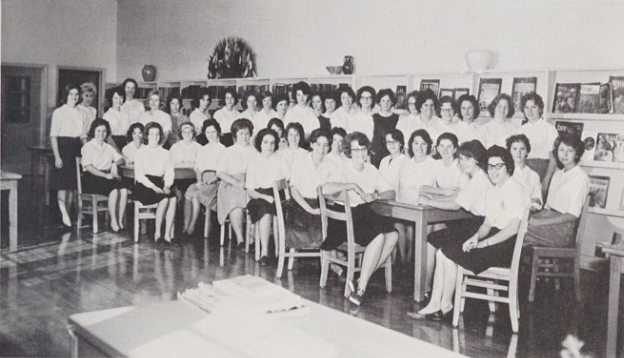
The Future Homemakers of America was another popular student activity. These meetings, like Home Economics classes, included lessons on cooking and sewing. The Glee Club also found popularity among Pinehurst High students, with a few students also participating in the Pinettes, a select singing group. In 1966, students at Pinehurst established the first chapter of the Future Business Leaders of America and attended the State Convention in Durham that year.
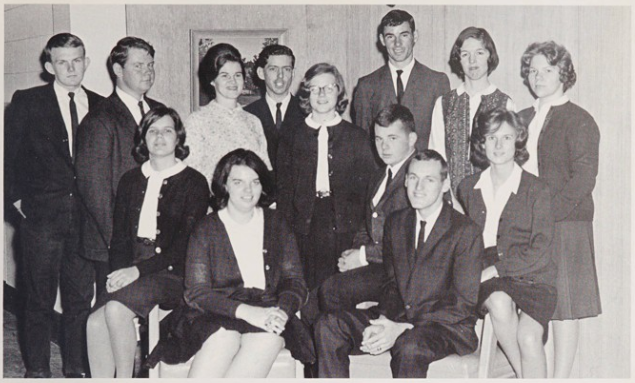
Of course, no yearbook would be complete without a feature of those who brought the edition together: the yearbook staff! The team compiled photos, advertisements, and wrote blurbs to make each book better than the last.
For more yearbooks from Moore County, click here.
For more information about our partner, Moore County Historical Association, click here.
New Editions of New Bern High School’s Bruin Yearbook Are Now Available!
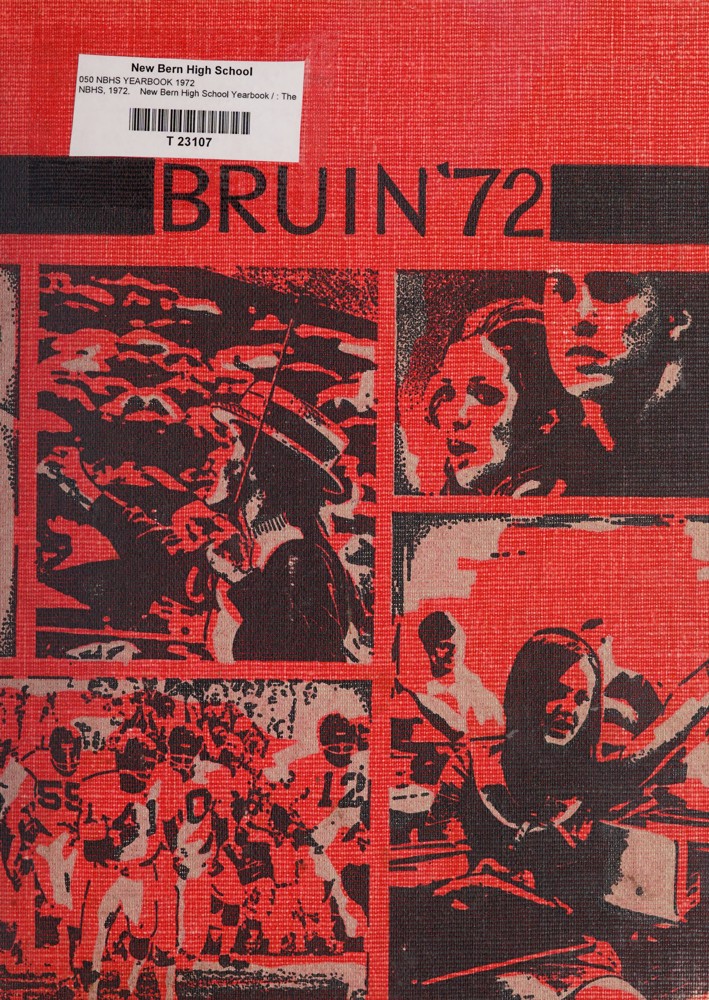
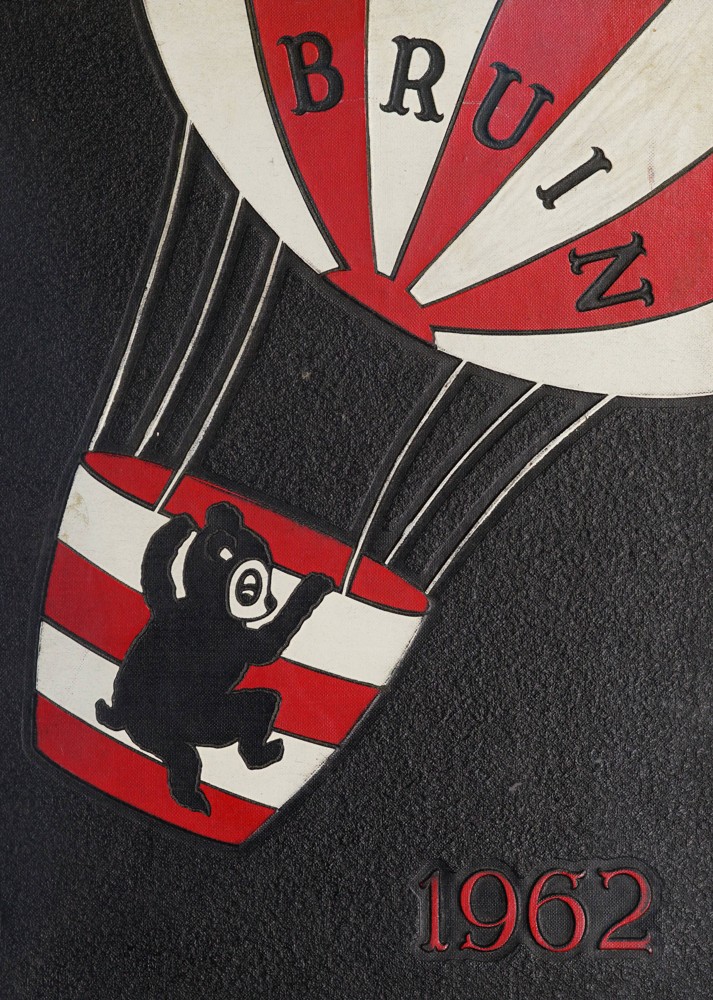
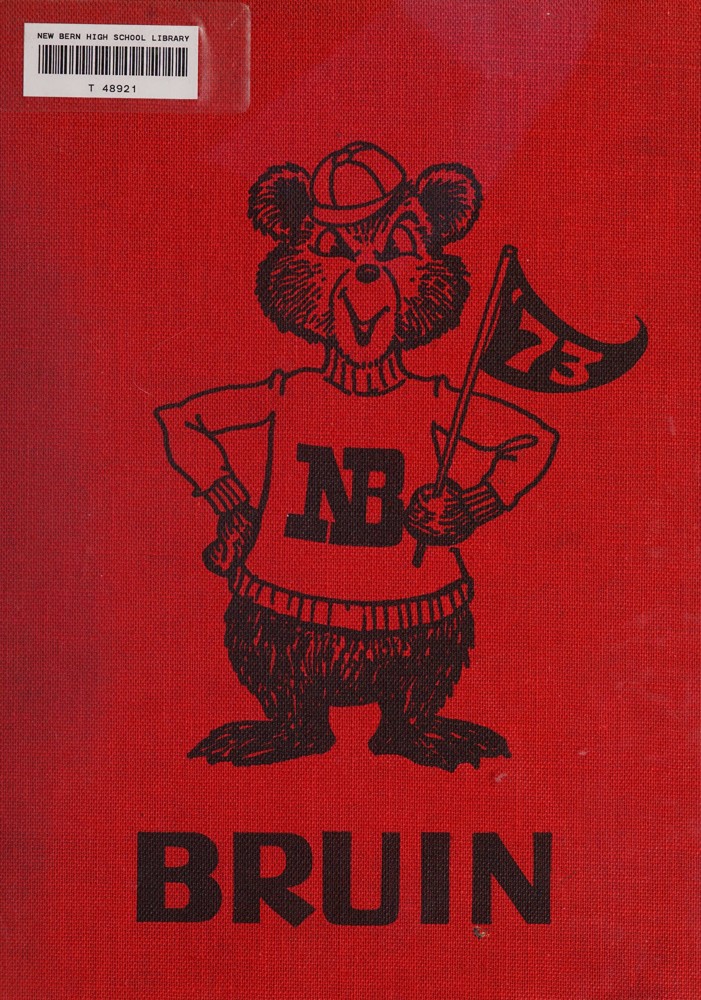
Thanks to our partner, the New Bern-Craven County Public Library, twelve new yearbooks from New Bern High School are now available! These editions of The Bruin span from 1961 to 1975 and showcase student involvement in the classroom and in athletics. The New Bern Bruins were an active bunch, with almost every student participating in at least one organization.
The new yearbooks include:
- Bruin [1961]
- Bruin [1962]
- Bruin [1963]
- The Bruin [1964]
- The Bruin [1966]
- The Bruin [1967]
- The Bruin [1968]
- The Bruin [1969]
- The Bruin [1970]
- The Bruin [1972]
- The Bruin [1973]
- The Bruin [1975]
To view more yearbooks from across the state, visit our North Carolina Yearbook Collections.
About
This blog is maintained by the staff of the North Carolina Digital Heritage Center and features the latest news and highlights from the collections at DigitalNC, an online library of primary sources from organizations across North Carolina.